
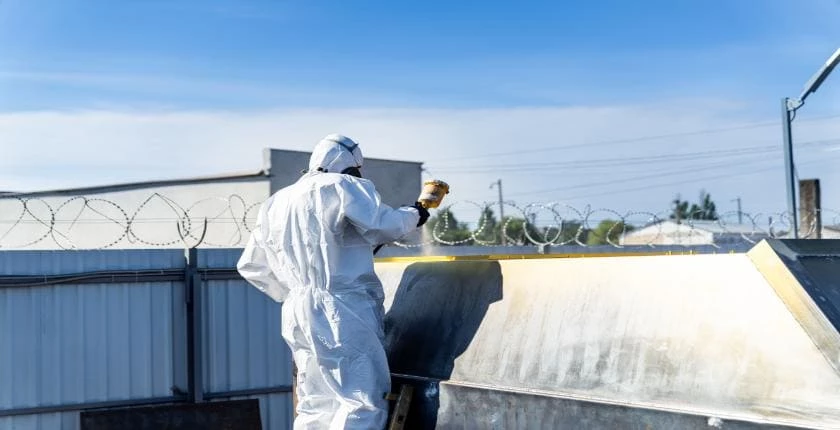
Asbestos Encapsulation
Get in TouchAt Militar Asbestos Solutions, we offer asbestos encapsulation services to protect your property from the risks associated with asbestos exposure. Our processes involve sealing asbestos materials, using high-quality encapsulants, and preventing fibre release.
This service is ideal for commercial, industrial, and residential properties. Covering and the surrounding postcode area, we ensure compliance with all safety regulations and provide a reliable solution to manage asbestos risks.
Contact us today to learn more about how asbestos encapsulation can benefit your property.
What Is Asbestos Encapsulation?
Asbestos encapsulation is a process where we seal asbestos materials to prevent the release of harmful fibres. This method involves using specialised coatings and sealants, such as polymer-based encapsulants and bridging or penetrating sealants, which adhere to the asbestos surface.
We assess each site to determine the most suitable type of encapsulant, considering factors like the condition of the asbestos and its location within the building. By encapsulating the material, we significantly reduce the risk of airborne exposure and make management easier.
Our experienced team ensures that all encapsulation work complies with UK health and safety standards, such as the Control of Asbestos Regulations 2012, and is often used in schools, hospitals, commercial buildings, and historic structures where asbestos removal might be too intrusive. This process offers a safe alternative to asbestos removal and extends the life of building materials, ensuring ongoing safety for occupants.
What Types of Asbestos Encapsulation Are Available?
We provide various asbestos encapsulation methods to suit different needs, each designed to manage and contain asbestos fibres effectively.
Bridging encapsulation: Applies a durable coating over the asbestos surface to create a protective layer, often used in environments where surface wear is minimal. Common products include latex and acrylic-based coatings, meeting British Safety Standards.
Penetrating encapsulation: Involves using a sealant that penetrates and binds fibres, offering internal reinforcement. This is ideal for areas where the asbestos material is friable, providing extra stability and reducing release risks.
Water-based encapsulation: Uses environmentally friendly products to minimise environmental impact. These contain no volatile organic compounds (VOCs), ensuring air quality remains uncompromised during application.
Our team helps you select the most suitable approach based on your property's requirements, taking into account factors such as building use, traffic levels, and compliance with Health and Safety Executive (HSE) regulations.
Which Asbestos Encapsulation Option Is Best?
Choosing the best asbestos encapsulation method depends on several factors:
Condition of asbestos: Good condition materials often benefit from bridging encapsulation, which coats the surface to prevent fibre release. This method is ideal for ceilings and walls in stable environments.
Location and environment: Areas prone to moisture, such as basements or bathrooms, may require water-based encapsulants that resist mould growth while ensuring a strong bond to the substrate. We recommend testing the substrate's moisture content prior to application.
Long-term management: Penetrating encapsulation is ideal for inaccessible locations, like pipework or structural beams, as it absorbs into the asbestos material, hardening it from within. This method is often chosen for industrial settings where space is restricted.
Understanding the various standards and specifications, such as those set by the Control of Asbestos Regulations 2012, is crucial in selecting the right method. Consult with our experts to determine the most effective method for your property.
What Does Asbestos Encapsulation Work On?
Asbestos encapsulation is suitable for multiple asbestos-containing materials, including asbestos cement sheets, thermal insulation, insulation boards, and decorative textured coatings like Artex. We employ encapsulation when these materials are in stable, undisturbed condition and inaccessible areas where full removal could cause more harm than benefit.
The encapsulation process involves applying a protective sealant, such as water-based elastomeric coatings, to prevent fibre release while maintaining the material's existing properties. Surfaces treated with encapsulation can include walls, ceilings, and pipework in both residential and commercial properties.
We use specialised equipment like airless sprayers to ensure even coating and adherence to standards such as the Control of Asbestos Regulations 2012. Our team evaluates each situation to provide the best asbestos management plan, catering to individual needs and ensuring the safety of occupants.
When Is Asbestos Encapsulation Needed?
Encapsulation is needed when asbestos-containing materials are in good condition but pose a potential risk of fibre release. This method involves applying a sealant to create a protective barrier around the asbestos materials, preventing fibres from becoming airborne.
It's a practical choice when the asbestos is intact but inaccessible for complete removal, such as in pipework or ceiling voids. If you're undertaking renovations, or if damaged surfaces are discovered during inspections, encapsulation may be recommended to prevent exposure and ensure safety.
This service is particularly useful for maintaining older buildings where asbestos is present, such as schools, hospitals, and historical properties. Encapsulation complies with safety standards set by the Health and Safety Executive (HSE) and can extend the life of the existing material.
Our team conducts detailed assessments to determine the suitability of encapsulation and provide solutions tailored to each property’s needs.
Contact us for expert advice and effective asbestos management.
How Does Asbestos Encapsulation Work?
The asbestos encapsulation process follows these steps:
Assessment: We perform a site survey to evaluate the condition of asbestos materials, using tools like fibre sampling and air monitoring to determine the extent of exposure and risk.
Preparation: Areas are sealed off to prevent contamination during work. We deploy negative pressure units and HEPA filters to maintain air quality and prevent fibre release.
Application: A suitable encapsulant is applied using spraying or brushing techniques. Our encapsulants, such as water-based polymer or acrylic solutions, form a flexible and durable barrier, resistant to impacts and weathering.
Inspection: We ensure coverage is complete and clean up the area. Our team uses infrared thermography to detect any missed spots and ensure even application.
This systematic approach guarantees a thorough encapsulation, meeting health and safety standards. We work across various property types, from residential buildings to industrial facilities.
Contact us to learn more about protecting your premises.
How Long Does Asbestos Encapsulation Take?
The time required for asbestos encapsulation varies based on the size and complexity of the project. For small areas, such as single rooms or sections of a building, the process can typically be completed within a day.
Larger projects, such as entire floors or industrial facilities, may take several days to a week. Factors affecting the timeframe include the number of asbestos-containing materials, their location, and the type of encapsulation product used, such as polyvinyl acetate or water-based acrylic copolymers.
Additionally, preparatory steps like surface cleaning and inspection by licensed professionals are crucial and may extend the duration slightly.
The drying time for encapsulants is generally 24–48 hours, depending on environmental conditions, such as humidity and temperature. We adhere to industry standards like ISO 11690 to ensure safety and effectiveness.
For precise scheduling, please contact us to assess your specific needs and arrange a consultation.
Who Needs Asbestos Encapsulation?
In , asbestos encapsulation is essential for property owners in older buildings, especially schools, hospitals, and industrial facilities where asbestos is present. This procedure involves applying a protective coating to asbestos-containing materials, like pipes or insulation, to prevent fibres from becoming airborne.
Property managers benefit from encapsulation as it helps maintain compliance with health and safety regulations such as the Control of Asbestos Regulations 2012. Renovation contractors often face restrictions under these regulations and need encapsulation to safely proceed with refurbishment projects.
Additionally, businesses operating in historical buildings may require this service to preserve structural elements while ensuring occupant safety. The encapsulation process typically involves specific materials such as polyurethane or acrylic sealants.
Get in touch with us for expert guidance and solutions.
How Much Does Asbestos Encapsulation Cost?
The cost of asbestos encapsulation typically ranges from £15 to £25 per square metre. Factors influencing price include the total surface area, condition of the asbestos, and accessibility.
Additionally, the encapsulation method can affect the cost, with options such as polymer coatings and water-based acrylics requiring specialised techniques. The thickness and type of encapsulating material, whether non-fibrous or fibre-reinforced, might also impact pricing.
We consider the presence of any damaged or friable areas that may need preliminary treatment to ensure safety. Our process involves an initial assessment, often using tools like borescopes for hard-to-reach areas, to determine the best approach.
We provide competitive quotes tailored to your specific needs, ensuring value without compromising safety. Contact us for a detailed consultation regarding your property type, from residential homes to industrial facilities.
What Are the Benefits of Asbestos Encapsulation?
Asbestos encapsulation offers a range of benefits that make it a practical choice for property owners. It is an essential method for safely managing asbestos in environments such as schools, hospitals, and industrial facilities without resorting to complete removal.
Cost-effectiveness: A more affordable alternative to asbestos removal, encapsulation involves applying a sealant or coating to the asbestos-containing material, significantly reducing the need for costly dismantling operations.
Safety: By using encapsulation agents, we effectively reduce the risk of fibre release and exposure. This is crucial for maintaining indoor air quality and safeguarding occupants' health.
Compliance: Our encapsulation services adhere to UK health and safety regulations, complying with Control of Asbestos Regulations 2012, which are designed to prevent asbestos-related diseases.
Preservation: Encapsulation extends the lifespan of asbestos-containing materials, preventing deterioration and maintaining structural integrity.
With our specialised equipment and experienced team, we ensure that your property remains safe and compliant. Contact us to explore the advantages of our services.
What Regulations Apply to Asbestos Encapsulation?
In the UK, asbestos encapsulation must comply with the Control of Asbestos Regulations 2012, overseen by the Health and Safety Executive (HSE). These regulations dictate that any work involving asbestos must include a risk assessment, and a detailed plan using materials that form a protective barrier, such as specialised paints or resins.
Additionally, we employ techniques like air monitoring to ensure airborne asbestos fibre levels remain below 0.1 fibres per cubic centimetre, as recommended by the HSE for optimal safety.
We also adhere to the British Standard BS 8520-2:2009, which provides guidelines on encapsulation selection and application. Compliance with these regulations not only safeguards against health risks associated with asbestos exposure but also prevents potential legal issues that can arise from negligent handling.
By following these standards, we prioritise the safety and wellbeing of clients in residential, commercial, and industrial properties across . Contact us to learn more about how we can assist you with asbestos encapsulation.
Why Choose Militar Asbestos Solutions for Asbestos Encapsulation?
Militar Asbestos Solutions is your trusted provider for asbestos encapsulation. Our experienced team uses a range of reliable encapsulation methods, such as applying robust polymer coatings and sealing agents designed specifically for asbestos-containing materials.
We ensure that all procedures are fully compliant with UK regulations, including The Control of Asbestos Regulations 2012.
We use specialist equipment, including airless sprayers and high-adhesion sealants, to coat and seal asbestos materials, preventing fibre release. Our encapsulation services are suitable for a variety of environments, from residential buildings to industrial sites and commercial properties.
We conduct thorough risk assessments to identify potential hazards before selecting the encapsulation method best suited to each location's conditions.
By monitoring encapsulated areas with air quality testing, we ensure ongoing safety after our work is complete. Choose us for expert service and peace of mind; contact us to discuss your asbestos management needs.
Asbestos Encapsulation: Frequently Asked Questions
How much does asbestos encapsulation cost?
Asbestos encapsulation typically costs between £15 and £25 per square metre. Prices vary based on the project's size and complexity.
Request a detailed quote from our team today.
How long does asbestos encapsulation last?
Encapsulation can last over 20 years if maintained properly. Regular inspections are recommended to ensure the encapsulated asbestos remains in good condition and does not need further intervention.
Is asbestos encapsulation safe?
Yes, asbestos encapsulation is a safe method to manage asbestos when materials are in good condition. It reduces the risk of fibre release and is a recognised alternative to removal, especially.
Can I do asbestos encapsulation myself?
We strongly advise against DIY asbestos encapsulation due to health risks and legal requirements. Engage our qualified professionals to handle asbestos safely and comply with regulations.
What areas in do you cover?
We cover all areas surrounding within the postcode area. Contact us for more information about our service coverage and your location-specific needs.
Get a Free Quote for Asbestos Encapsulation
Contact us today to arrange a free quote for asbestos encapsulation. Our experts at Militar Asbestos Solutions are ready to provide you with professional, compliant services tailored to your needs.
Related Asbestos Encapsulation Services
Before deciding whether asbestos can remain safely in place, our asbestos surveys can assess the location, condition and type of asbestos-containing material.
Where damaged or unsuitable materials require removal, our asbestos removal specialists provide safe and compliant removal solutions.
For ongoing management of asbestos that remains in situ, our asbestos management plans provide a structured approach to monitoring and controlling risks.
Where the material requires confirmation before treatment, our asbestos testing and sampling service can verify the presence and type of asbestos.
If asbestos-containing materials become damaged or disturbed, our emergency asbestos removal provides rapid specialist assistance.